Search This Blog

Saturday, April 9, 2016

The reason(s)

Morsels of food are delicious because of the little things, the subtle seasonings, the dash of salt, the sprinkle of garlic, the garnish of parsley, the touch of glaze, or the hint of lemon.  Ahhhh - so delicious!


Thomas Blackshear
Forgiveness

Life and death are two facts everyone grows up learning about so that by the time a person is an adult, he or she knows death is the sure and certain end of life.  I, too, have seen this principle to be true without exception, so it is the surest fact I know.

Then Jesus came and changed the surest thing I know.  First he changed the terminology used from time immemorial to more accurately represent what is happening.  It's hard for me to accept because my eyes and experience have told me different my whole life.  But, on three occasions Jesus went to a group of people and told them that the person they were mourning for was only sleeping.  The groups really couldn't fathom the idea because it contradicted everything they had been taught and everything they had seen and experienced.  That didn't stop Jesus, though, from saying that people were really only sleeping.  And when he brought them back to life he merely told them to wake from their sleep.  He told two of the three very directly, "Wake up."  And they did.  He told the third, Lazarus, a direction to walk out of the tomb, "Hey, out here," knowing that Lazarus was already awake.  Even for himself, Jesus did nothing different.  After being killed in the sight of many, many people and sealed tightly in a tomb.  He simply woke up.

Jesus also taught about life in a different way than others.  Teachers before him could say that following their teachings would give a person "quality life" or "enlightened life" while alive.  But Jesus told a woman he could give her living water, and after drinking it, she would never thirst again.  He told Martha that he was life, that she should trust him on that because her brother was going to wake up.  He told other people that he was truth and life, but he didn't mean that he was offering good instruction to follow, and by following it, they could live enlightened (the abundant life).

It was a different teaching.  John 10 illustrates well the idea that has changed what I have seen and what I have experienced.  Jesus was saying that his words were authentic and different from what others before him had taught.  He used an analogy about a shepherd with his sheep, but the people he spoke this to didn't understand his analogy.  So, he changed one element in the analogy slightly.  He said that he was a gateway for his sheep to enter through for good pastures.  Everyone else who had come before him as a gateway to some kind of good teaching was merely a thief to rob the sheep of good pasture.  Then he spoke of what he had that the ones before him never had.

Verse 9

ἐγώ εἰμι ἡ θύρα· δι’ ἐμοῦ ἐάν τις εἰσέλθῃ σωθήσεται καὶ εἰσελεύσεται καὶ ἐξελεύσεται καὶ νομὴν εὑρήσει

(I am the gateway.  Whoever enters through me will be rescued.  He will come and go and find pastures to eat from.)

Verse 10

ὁ κλέπτης οὐκ ἔρχεται εἰ μὴ ἵνα κλέψῃ καὶ θύσῃ καὶ ἀπολέσῃ· ἐγὼ ἦλθον ἵνα ζωὴν ἔχωσιν καὶ περισσὸν ἔχωσιν

(The thief doesn't come unless he is coming to steal, take life, and destroy.  I have come so that you could have life, and you could have something more than you can imagine.)

Jesus didn't keep people in the dark.  He gave his purpose.  He said that he came so that people could have two things.  I have thought I knew what the first thing was - life - because  I was taught as a youth that life referred to my second life as a reward for believing and following the Bible.  The second thing was merely a description of the first thing: abundant life.  Jesus came that we might have life and have it more abundantly.  Translations have opted to describe the quality of life than to speak of Jesus offering life and offering something else separately.  Consequently, I didn't know about a second reason for his coming.

As it turns out, I think I am like Martha, after Lazarus died.  She told Jesus she knew Lazarus would rise again on the last day.  That's where I was.  Jesus chastised her for not seeing that he was life, and so was Lazarus for believing.  I feel Martha's chastisement because Martha's response would have been mine.  She understood, as have I, that this life ends, then believing produces a second type of life, a spiritual life.


In order to arrive at a translation of what Jesus said as abundant life, one has to make the second idea following the second verb into merely an adjective for life.  Other people translate the second idea after the second verb descriptively also, but put it into an adjectival phrase, like life in all its fullness or an adverbial phrase such as live life fully.  That's not what is said, though, so it is hard for me to make the second idea a description of life.  Jesus said "I have come so that you should have life and you should have ______."  The normal way to make adjectives or adverbs in Greek does not use two verbs .  The sentence construction in this passage has two verbs.  They are the same verb, but that redundancy is to show that there are two separate elements, two different direct objects, following the verb.  That would make the second object a substantive like life is, not a description of life.  The meaning of the second element would not change the semantic domain of something extra, added, extravagant, superfluous, or extraordinary, as in the word abundant.  It would just change the part of speech from a descriptive word or phrase to a nominative word or phrase.  So the idea is that we could have life (first direct object) and something extraordinary (second direct object).

So, something exceedingly more than I have now is what Jesus said he was offering.  I have life now, but going through Jesus as a gateway to eat in green pastures offers me a whole lot more of something I don't have now.  As I have understood the passage in the past, entering through Jesus gave me more of something I have already.  But, Jesus is saying that if I don't go through him as the gateway, then I don't get what he offers.  Instead, a thief steals my life and the second idea, kills them in me, and eliminates them altogether.

The second object is a noun, so it is a place (or an idea).  Jesus told the Twelve later in John (John 14.4) that he was going to prepare a place for them (or an idea, if the place is taken as metaphorical).  So, in the passage above, Jesus seems to be indicating this place he was preparing.  This idea would make the translation of the second half of verse 10, "I came so that you could have life and have an extraordinary place, one beyond your imagination."

For John it took Jesus' sleep before he understood what life was.  He had to go to the tomb, walk in, and see Jesus' grave clothes on the ground and his face cloth folded on the burial pedestal.  He looked around, then knew what he was seeing.  It impressed him - so much so that he included an image of what he came to understand from the tomb when he wrote his visions at the end of his Earthly life.  His last vision was of the place where God was, Jesus also.  His description follows (Revelation 22).

Verse 1

Καὶ ἔδειξέν μοι ποταμὸν ὕδατος ζωῆς λαμπρὸν ὡς κρύσταλλον, ἐκπορευόμενον ἐκ τοῦ θρόνου τοῦ θεοῦ καὶ τοῦ ἀρνίου

(He showed me a river as clear as crystal, flowing with the water of life from the throne of God and the Lamb)

Verse 2

ἐν μέσῳ τῆς πλατείας αὐτῆς καὶ τοῦ ποταμοῦ ἐντεῦθεν καὶ ἐκεῖθεν ξύλον ζωῆς ποιοῦν καρποὺς δώδεκα, κατὰ μῆνα ἕκαστον ἀποδιδοῦν τὸν καρπὸν αὐτοῦ, καὶ τὰ φύλλα τοῦ ξύλου εἰς θεραπείαν τῶν ἐθνῶν

(And in the middle of its widest part, the river flowed on either side of a live tree, which produced twelve fruits, one type for each month, and which grew both fruit and leaves for healing of the nations.)

Since water is the sustaining force of life on Earth, what better image for John's vision than showing water as a river from the source of life itself, the throne of God and the Lamb.  John understood what Jesus was about and who he was.  He was the essence of life.  He didn't have life in him, he was life as was his father.  They shared the same essence.  John used the thrones of God and Jesus as the source of a river giving life to a tree to produce its fruits and leaves for healing the world's nations.

Beautiful imagery.  He captured very well what he had suddenly realized and understood clearly when he had gazed at the burial clothes on the ground of the tomb those many years ago.  Jesus was life, and he surrounds us like a river around a tree living in the middle of it.  And, we serve as a healing force for the nations.  Beautiful imagery, truly.

Verses 3-5 give that o-o-oh so flavorful morsel.  What Jesus said when he walked the Earth, that he came for people to have something so much more than is imaginable, is also described.  It was the second idea from John 10 where Jesus said the purpose for him to come was so that 1) we could have life, AND  2) we could have something much, much more, something extraordinary, beyond our imagination - the direct presence of God.

Verse 3

καὶ πᾶν κατάθεμα οὐκ ἔσται ἔτι. καὶ ὁ θρόνος τοῦ θεοῦ καὶ τοῦ ἀρνίου ἐν αὐτῇ ἔσται, καὶ οἱ δοῦλοι αὐτοῦ λατρεύσουσιν αὐτῷ

(There will no longer be anything restricting us from him.  The throne of God and the Lamb will be in it, and everyone will serve him.)

Verse 4

καὶ ὄψονται τὸ πρόσωπον αὐτοῦ, καὶ τὸ ὄνομα αὐτοῦ ἐπὶ τῶν μετώπων αὐτῶν

(They will see him in person and his name will be everywhere they look.)

Verse 5

καὶ νὺξ οὐκ ἔσται ἔτι καὶ οὐκ ἔχουσιν χρείαν φωτὸς λύχνου καὶ φωτὸς ἡλίου, ὅτι κύριος ὁ θεὸς φωτίσει ἐπ’ αὐτούς, καὶ βασιλεύσουσιν εἰς τοὺς αἰῶνας τῶν αἰώνων.

(Night never falls, and no one ever needs light from a torch or from the sun because the Lord God illuminates their world.  They rule into infinity.)

I don't have to settle for believing like Martha or like the Twelve before Jesus appeared to them after he woke up.  I don't have to worry about whether I will receive an abundant life now or not.  Jesus came for us to have his life and his place.  We have a three dimensional life now.  It will continue after we sleep with some modifications, evidently, to this existence.  We experience an existence now, but going through the gateway of Jesus and sleeping briefly allows our existence to change over to an incredibly majestic place, a place in the direct presence of God.  Continuance of existence is the name of the game because thieves steal, end, and destroy one's existence, or at least our existence in the presence of God.

My response to what Jesus offers is deep and not always found in words.  But if music and words could express it, it would be in the words to the song below, Take off my shoes.


[The Greek text used is the Nestle-Aland 28th edition.]
[Songs used are Take Off My Shoes by Delirious and I'll See You Again by Westlife.]
[Introductory art, Forgiveness, by Thomas Blackshear retrieved from
https://www.google.com/search?q=christian+art&rlz=1C1CHFX_enUS524US524&espv=2&biw=1366&bih=643&tbm=isch&imgil=XcD9egmRwI1opM%253A%253BEEU6XG3sbIgqfM%253Bhttp%25253A%25252F%25252Fwww.spiritandflesh.com%25252Fart_Christian_art_Jesus_Christ_Cosmic_Christ_artChristianReligion.htm&source=iu&pf=m&fir=XcD9egmRwI1opM%253A%252CEEU6XG3sbIgqfM%252C_&usg=__f6MgpiEc1SXco5HCuR4GUKiIzgg%3D&ved=0ahUKEwj5zraWi_3LAhVhkoMKHc1-CBYQyjcILA&ei=op0GV_n1EeGkjgTN_aGwAQ#imgrc=ebn9OG6tZKmPhM%3A]

[Translations from Greek are my own.]

Sunday, March 27, 2016

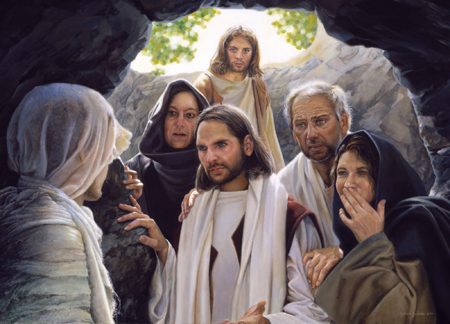
Daybreak, Sunday morning

Morsels of food are delicious because of the little things, the subtle seasonings, the dash of salt, the sprinkle of garlic, the garnish of parsley, the touch of glaze, or the hint of lemon.  Ahhhh - so delicious!


Jesus had been in the public's eye for about 2 1/2 years.  He had taught them about God's realm steadily.  He had healed many and forgiven people of their failures.  He had spoken of true worship and pointed to false and pretentious habits of people who approached God, his father.  Finally, he was at the end.  He talked to his Twelve closest and hand-selected followers of his death and subsequent awakening and depart to prepare them for those events.  He knew how the end would play out.

And so it happened - exactly.  The Sandrin hastily tried him.  The Roman prelate torturously killed him.  Joseph of Arimethea buried him in a tomb he donated.  It all happened on a Friday.  Saturday must have been a great day of mourning for those who had trusted God that Jesus had been his messiah to deliver them.  Their hopes for an earthly realm to defeat the Roman Empire were completely dashed.  That Sabbath for Jews who believed that the Son of Man was also the Son of God had to have been a day of great questioning and contemplation.  Could they really trust God from this point on?  The Pharisaical establishment and the scholars of the Talmud felt a little more secure that day.  Jesus was in the tomb where he could not damage God's image any longer.


Sunday morning, slightly before daybreak, the dark of night still shrouded Jerusalem.  The Twelve slept, scattered across the city, after a day of pondering the meaning of the life that had been taken, the teaching that Jesus had given, especially of his being the Son of Man, and their next move now that he had died as he had told them again and again over the last six months.

The Twelve were unaware of something happening at the tomb where Nicodemus had buried Jesus and sealed a rock in front of the tomb's entrance.  So was Mary of Magdala as she rose at a pre-dawn hour to start her Sunday morning remembering Jesus at his tomb.  So was Mary, Jesus' mother, who hoped against hope that Jesus truly did have the power to lay down his life and take it up again.

The guards that had been placed at the tomb's entrance, however, were very aware of the ground shifting beneath their feet at this early hour before Sunday's dawn.  The cave containing Jesus' body rumbled, cracked, and rocked, loosening the sealed stone and knocking it to the ground.  Jesus, also, was very aware of his time to wake up.  He lifted himself from the burial pedestal, removed and folded his face cloth, and left the rest of his burial robes disheveled on the ground.  God himself was very, very aware that his son had awakened.   He sent his messenger who split the deepest blackness of early morning inside the tomb and in the garden outside its entrance with spectacularly brilliant and dazzling light.  The messenger's robe reflected pure white against the dark sky as he showed Jesus Heaven's open arms for him.

 Jesus walked from the tomb away from the light out into the garden area that Nicodemus had made as an entryway to the tomb.  He saw Mary of Magdala as she scurried up the path toward the tomb.

Verse 1

Τῇ δὲ μιᾷ τῶν σαββάτων Μαρία ἡ Μαγδαληνὴ ἔρχεται πρωῒ σκοτίας ἔτι οὔσης εἰς τὸ μνημεῖον καὶ βλέπει τὸν λίθον ἠρμένον ἐκ τοῦ μνημείου

(On the first day of the week, Mary from Magdala came to the tomb early while it was still dark and saw that the stone had been removed from the tomb )


Verse 2

τρέχει οὖν καὶ ἔρχεται πρὸς Σίμωνα Πέτρον καὶ πρὸς τὸν ἄλλον μαθητὴν ὃν ἐφίλει ὁ Ἰησοῦς καὶ λέγει αὐτοῖς· ἦραν τὸν κύριον ἐκ τοῦ μνημείου καὶ οὐκ οἴδαμεν ποῦ ἔθηκαν αὐτόν

(She ran and came to Simon Peter and the other follower that Jesus cared for deeply and told them, "They have removed the Lord from the tomb and we don't know where they have put him.")

Mary wasn't thinking that Jesus was alive, she thought that Jesus' body had been stolen from the tomb.  Since the Roman guard wasn't there at the tomb, and it was still before daybreak, she concluded that they were trying to thwart the Jews' attempt to overthrow them.  So, she reported to Simon and John her suspicions.  John's record isn't clear on whether or not the two were in the same place.  Mary might have had to go to two different places.  Nonetheless, she reported her conclusion to both of them.

Verse 3

Ἐξῆλθεν οὖν ὁ Πέτρος καὶ ὁ ἄλλος μαθητὴς καὶ ἤρχοντο εἰς τὸ μνημεῖον

(So Peter and the other follower left to go to the tomb.)

Verse 4

ἔτρεχον δὲ οἱ δύο ὁμοῦ· καὶ ὁ ἄλλος μαθητὴς προέδραμεν τάχιον τοῦ Πέτρου καὶ ἦλθεν πρῶτος εἰς τὸ μνημεῖον

(The two ran together, but the other follower outran Peter and arrived first at the tomb.)

Verse 5

καὶ παρακύψας βλέπει κείμενα τὰ ὀθόνια, οὐ μέντοι εἰσῆλθεν

(He stooped at the entrance, glanced around, and saw linen burial strips lying on the ground.  But he didn't enter the tomb.)

Verse 6

ἔρχεται οὖν καὶ Σίμων Πέτρος ἀκολουθῶν αὐτῷ καὶ εἰσῆλθεν εἰς τὸ μνημεῖον, καὶ θεωρεῖ τὰ ὀθόνια κείμενα

(Simon Peter had been behind John, but he entered the tomb and saw the linen burial strips lying on the ground)

Verse 7

καὶ τὸ σουδάριον, ὃ ἦν ἐπὶ τῆς κεφαλῆς αὐτοῦ, οὐ μετὰ τῶν ὀθονίων κείμενον ἀλλὰ χωρὶς ἐντετυλιγμένον εἰς ἕνα τόπον

(and the cloth used to wipe Jesus' face and then left on it to cover it was not lying on the ground with the linen burial strips but was rolled up and put in a separate place.)

Verse 8

τότε οὖν εἰσῆλθεν καὶ ὁ ἄλλος μαθητὴς ὁ ἐλθὼν πρῶτος εἰς τὸ μνημεῖον καὶ εἶδεν καὶ ἐπίστευσεν

(Then the other follower who had come first to the tomb, went in.  He looked around and knew and believed.)

From Friday when Jesus died until this moment before daybreak, the followers of Jesus hadn't fully understood the events that had taken place.  But when the two closest followers looked around the tomb, they immediately put two and two together.  For John in particular, he looked around, saw the burial clothes that had been shed or rolled up, and believed.  I would assume the same thing happened for Simon The Rock.  Jesus had told them he would wake up on the third day.  Now they saw for themselves before anyone else had been told and before the Romans could send reinforcements for the guards who had been there at the actual time of Jesus' rising.  Amazement, relief, belief were all rolled  into that ecstatic moment of realization.

Don Francisco has composed a beautiful song from Simon's point of view about this very day, this very act, this very emotional experience.


Simon and John left and went their own ways after they realized what had happened.  Mary of Magdala, however, didn't.  She had followed Simon and John, perhaps running to keep up with them. She hadn't gone in the tomb while they were in there, but had stayed outside the tomb, crying about what had happened to Jesus.  She really didn't need one more thing to cry about.  After Simon and John had left, she stooped to enter the tomb.  She, however, saw something quite different from Simon and John.  She saw two messengers in white robes sitting on the head and foot of the burial pedestal.  They asked her one question, "Why are you mourning?"

But Mary didn't get it.  She answered them by saying someone had taken her Lord and she didn't know where they had put him.  Maybe Mary couldn't see through her tears, or maybe she had kept her head lowered, but she couldn't see that the messengers were dressed alike and were not Romans, not even Jewish Sanhedrin guards.  She simply assumed they were there as the day was dawning to guard against people entering the tomb.  She turned to go.

Evidently, Jesus, who had not been noticed on the fringe of the garden in front of the tomb, had seen Mary walk into the tomb, so he met her at the entrance as she was coming out.  Jesus asked Mary the same question as the messengers, "Why are you mourning?" and added, "Who are you looking for?"  Mary still didn't get it because she wasn't expecting it.  She either couldn't see through her tears still or she kept her head lowered.  She assumed the gardener was speaking to her.  Given her conclusion about Jesus' body being taken somewhere else, she thought he probably had been paid to move it, so she asked him where he had taken it.

I don't know if Jesus bent over and looked into Mary's face or said Mary's name in an intonation that he had used with her before he had died.  Maybe just hearing her name called by someone that she thought was an impersonal, unknown gardener caught her attention.  But she looked up finally, or cleared her tears away because she recognized the familiar voice calling her name.

Verse 16

λέγει αὐτῇ Ἰησοῦς· Μαριάμ. στραφεῖσα ἐκείνη λέγει αὐτῷ Ἑβραϊστί· ραββουνι, ὃ λέγεται διδάσκαλε

(Jesus said to her, "Mary."  She turned around.  "Rabbouni" she said in Hebrew, that is to say, "My dear, dear teacher!")

Verse 17

λέγει αὐτῇ Ἰησοῦς· μή μου ἅπτου, οὔπω γὰρ ἀναβέβηκα πρὸς τὸν πατέρα· πορεύου δὲ πρὸς τοὺς ἀδελφούς μου καὶ εἰπὲ αὐτοῖς· ἀναβαίνω πρὸς τὸν πατέρα μου καὶ πατέρα ὑμῶν καὶ θεόν μου καὶ θεὸν ὑμῶν

(Jesus told her, "Don't embrace me!  I haven't gone to my father yet.  But, go to my brothers and tell them that I am going on to my father and your father, my God and your God.")


Two morsels provide flavor from this portion of John.  John went into the tomb and εἶδεν καὶ ἐπίστευσεν (He looked around and knew and believed).  If I think about that, I find myself in John's shoes.  He had been with Jesus and had been told of the events that had occurred ahead of time just as I have been raised to read the New Testament and follow it.  But, I learn the hard way.  I have to look around and see.  εἶδεν means both to see and to know, sometimes to know because you see.  Oh, John had been told, as have I.  But, it took seeing/knowing, then the scene dawned on him.  Oh yes, then he understood what life was.  I know I have been guilty of not seeing past what my eyes take in in the world around me.  I have been taught there is an afterlife.  But Jesus didn't have merely afterlife in mind when he spoke of giving believers their lives.  Death was merely a sleep event between lying down in this life and getting up in the next life.  I have had difficulty really understanding, though, because like John, I have had to see the robes on the ground, then I knew... then I believed.

Mary, too, was in despair even after seeing messengers from Heaven inside the tomb.  She didn't look up or see through her tears to know she was actually talking to someone have had woken up until Jesus bent to look her in the face and call her name, then she reached to embrace him, calling him by her familiar name, "ραββουνι."  It was her personalized name for him, the equivalent of using the pronoun my.  And it was a show of great, great respect that the simpler term "Rabbi" didn't carry, the equivalent of adding dear, dear to the term .  It took seeing him, then finally, Mary understood what life was.  I am the same way.  I have heard people's words telling me what has happened and have still not realized what exactly happened.  I needed Jesus to appear to me and call my name.  So he did, and then I knew... then I believed.

Today, daybreak, Sunday morning... it happened... and I understand now what life is... robes on the ground... a familiar voice calling my name... I believe.


[The Greek text used is the Nestle-Aland 28th edition.]
[Songs used are Sunday's on the Way by Carman, He's Alive by Don Francisco, and Forever by Kari Jobe.]
[Introductory art, Resurrection, by Nathan Greene retrieved from
http://www.ebay.com/itm/HD-Print-Portrait-Oil-Painting-Wall-Decor-Art-on-Canvas-Jesus-Christ-01-24x36/252260029537?_trksid=p2141725.c100337.m3725&_trkparms=aid%3D777000%26algo%3DABA.MBE%26ao%3D1%26asc%3D20141212152338%26meid%3D0c34f7e3dcdb4078aea1115da303a9cf%26pid%3D100337%26rk%3D1%26rkt%3D1%26sd%3D221844504821]

[Translations from Greek are my own.]

Sunday, March 20, 2016

By our side

Morsels of food are delicious because of the little things, the subtle seasonings, the dash of salt, the sprinkle of garlic, the garnish of parsley, the touch of glaze, or the hint of lemon.  Ahhhh - so delicious!


The people of old didn't have the advantage of the historical position Christians sit in today.  They didn't have hindsight as we do, so they saw blurred pictures and failed to understand the clarity of the situation.  But even if modern Christians sit in a better vantage point, I understand perfectly the feeling a person has when a concept is nebulous, blurred, or otherwise hard to grasp because of shifting life experiences yielding seemingly conflicted semantics for an idea.  It has happened to me over time because my experiences with certain ideas shift over time.

The song below presents very incredibly the conflicting ideas the Jews in Jesus' time were piecing together for God, his promised messiah, and the future presence of God on Earth after hearing Jesus' teaching.  Listening to what Elevation Worship offers in the song Yahweh, below, very exactly helps one digest the idea of what Jesus was saying in John 14.  I hope you will let this worshipful song enhance your experience of John's record of Jesus' words of the one who was to come.


God made his name known to Moses in the event of the burning bush when Moses asked God, "Who do I say has sent me?" (Exodus 3.14; 6.2-3)

"יהוה"  was the answer.

Translating this word is in some ways not hard.  The Jews always have understood it.  They revered it.  They went through a period of time when they wouldn't pronounce it.  Their scribes who transmitted the text of the Old Testament went through a period of time when they washed themselves and their writing utensil after writing the name because it was so holy.  In that tradition, many translations of the Bible have used a euphemism for the word, such as Lord,  rather than translating it directly since it was so sacred.  But, the Jews have always known what יהוה (Yahweh)   has meant.

But translating the word is in some ways really, really difficult.  To Moses it meant something on the order of The one who was and is and is to come, The one who is always present, The one who lives always - past, present, and future, The one who is - no matter the age, The one who exists in all the Earth, The one fills all time, The one who is always beside you.

When Moses went to tell Israel and Pharaoh who sent him, he did just that.  He told them יהוה (YHWH) has sent me.  Can you imagine what they must've said besides, "Who is that?"  Over the next 1300 years, the Jews learned who יהוה (YHWH) was but boiled the name down to the two words, I AM.  Jesus used I AM as his reference point, saying it was his father's name, and his own, which is why the Jews could not tolerate the thought of him extending the meaning of the I AM of their understanding, and of their fathers, to apply to Jesus.

Less than a week before Jesus departed the Earth, he spoke to his Twelve selected men.  He had told them about his impending death, his timing for waking again , and his departure for his father's realm where he would prepare many places for his followers to live.  He lacked telling them one more thing before he left.

Verse 1

Μὴ ταρασσέσθω ὑμῶν ἡ καρδία· πιστεύετε εἰς τὸν θεὸν καὶ εἰς ἐμὲ πιστεύετε

(Don't allow your heart to be disturbed.  You trust God, so trust me too.)

The discourse that followed was a beautiful rendition of the name יהוה (YHWH - I AM).  Then Jesus ended his words of presence, his YHWH dialog, in the same fashion he began:

Verse 27

Εἰρήνην ἀφίημι ὑμῖν, εἰρήνην τὴν ἐμὴν δίδωμι ὑμῖν· οὐ καθὼς ὁ κόσμος δίδωσιν ἐγὼ δίδωμι ὑμῖν. μὴ ταρασσέσθω ὑμῶν ἡ καρδία μηδὲ δειλιάτω

(I am leaving peace with you.  I'm not giving you peace as the world gives it.  Don't allow your heart to be disturbed or afraid.)

The morsel to savor for its awesome, robust flavor are two verses in the middle of the dialog telling of I AM, not in Heaven, not in the flesh, but the I AM inside us, beside us every step of our trusting way.

Verse 15

Ἐὰν ἀγαπᾶτέ με, τὰς ἐντολὰς τὰς ἐμὰς τηρήσετε

(If you care for me, you will observe the things I have told you to be doing.)

Verse 16

κἀγὼ ἐρωτήσω τὸν πατέρα καὶ ἄλλον παράκλητον δώσει ὑμῖν, ἵνα μεθ’ ὑμῶν εἰς τὸν αἰῶνα ᾖ

(And I will ask Father to give you someone else to stand beside you so that forever he can be with you,)

Verse 17

τὸ πνεῦμα τῆς ἀληθείας, ὃ ὁ κόσμος οὐ δύναται λαβεῖν, ὅτι οὐ θεωρεῖ αὐτὸ οὐδὲ γινώσκει· ὑμεῖς γινώσκετε αὐτό, ὅτι παρ’ ὑμῖν μένει καὶ ἐν ὑμῖν ἔσται

(the spirit of truth that the world cannot receive because they have no frame of reference to know, but you do.  He stands with you and is in you.)

And if the Twelve thought they were being given too big a responsibility after Jesus' departure, he promised them them his presence, his I AM nature, but not in the flesh.

Verse 25

Ταῦτα λελάληκα ὑμῖν παρ’ ὑμῖν μένων

(I have said these things while being with you.)

Verse 26

ὁ δὲ παράκλητος, τὸ πνεῦμα τὸ ἅγιον, ὃ πέμψει ὁ πατὴρ ἐν τῷ ὀνόματί μου, ἐκεῖνος ὑμᾶς διδάξει πάντα καὶ ὑπομνήσει ὑμᾶς πάντα ἃ εἶπον ὑμῖν

(Father will send the Holy Spirit, the one who stands beside you, in my name.  He will teach you everything and remind you of everything I told you. )

Jesus spoke of his/God's Spirit both to those who follow his words and to the Twelve who needed his personal strength as παράκλητος (the one who stands beside me).  I can read the setting to know that the Twelve felt fearful of being followers in a world without Jesus.  They knew that people would have questions about a recently departed messiah.  I know they had the same question that Moses had.  "Who do we say has sent us?"

παράκλητος (the one who stands beside us, the one who is with us in our moments of need) is the answer.

The one who stands beside us, The one who represents us, The one who helps us remember the relevant past, and The one who fills the present, The one who is... the not-in-flesh, not-in-Heaven, God/Jesus-in-us.

I AM - in spirit.

My heart is not disturbed!


[The Greek text used is the Nestle-Alland 28th edition.]
[Songs are sung by the groups Elevation Worship and Jesus Culture.]
[Introductory art, Peace Be With You, by Susie Boyer from
http://www.fulcrumgallery.com/c7594/christian-art.htm?page=2]
[Translations from Greek and Hebrew are my own.]

Monday, March 14, 2016

Tears to the eyes

Morsels of food are delicious because of the little things, the subtle seasonings, the dash of salt, the sprinkle of garlic, the garnish of parsley, the touch of glaze, or the hint of lemon.  Ahhhh - so delicious!


I have read a few of the books containing stories of people who have died and returned.  Some say they were gone for an hour or two.  A smaller number were in their out-of-body experience for 4-8.  They're very interesting accounts.

There's an ancient story, too, that tells the same kind of story.   It's from John's pen (John 11) in the days of Jesus when a man in Bethany, two miles outside of Jerusalem, died and returned.  The Christian singer Carman has composed a song depicting a provocative perspective of John's account to help us modern people consider the amazement of what happened.  The song is below.


It had been a week or less since Jesus had left Jerusalem, escaping a fate of stoning.  In fact, Jesus had left the country (of Judea).  The scholars of the Talmud and the important political circle leaders had determined they needed to kill Jesus.  Jesus had decided to bring his teaching to their country.  As long as he had stayed out in the outlying regions of Judea like Samaria, Galilee, Tyre and Sidon, Caesarea Philippi, and the Decapolis, the important Jews didn't see Jesus' teaching as anything more than an ever-buzzing, irritating gnat.  But, Jesus had brought the fight to them.  So, they were ready for him.  They actually would have killed him about the same time he arrived in Jerusalem, but he had mysteriously disappeared and had left Judea.  They figured he would return because Passover was only about a month away.  They waited for his return.

After  a week or so outside of Judea, Jesus received a message from Bethany, a village just two miles out of Jerusalem.  There weren't too many people who knew where he was, so he knew the message must be important.  It was.  His great friend and brother of two women, also his great friends, had died.  The fact that Jesus didn't respond right away seemed all right with his Twelve because they knew the Judean establishment was up in arms and might kill them too since they followed Jesus' teachings.

But two days after the message had come to them, Jesus told them that Lazarus needed to be awakened from his sleep, so he was going to Bethany to do that.  Fact check: Jesus was not in Judea so he wouldn't be killed.  Who in his right mind would risk his life to go wake someone else up?  Well, alrightee then.  Let's go even if we have to die with him was Thomas' response.  I'm sure he was a bit tentative about that.

Verses 21

εἶπεν οὖν ἡ Μάρθα πρὸς τὸν Ἰησοῦν· κύριε, εἰ ἦς ὧδε οὐκ ἂν ἀπέθανεν ὁ ἀδελφός μου

(Martha said to Jesus, "Lord, If you had been here, my brother would not have died.)

Verse 22

καὶ νῦν οἶδα ὅτι ὅσα ἂν αἰτήσῃ τὸν θεὸν δώσει σοι ὁ θεός

(Even now I know that God will give you whatever you ask him for.")

Verse 23

λέγει αὐτῇ ὁ Ἰησοῦς· ἀναστήσεται ὁ ἀδελφός σου

(Jesus said to her, "Your brother will get up.")

Verse 24

λέγει αὐτῷ ἡ Μάρθα· οἶδα ὅτι ἀναστήσεται ἐν τῇ ἀναστάσει ἐν τῇ ἐσχάτῃ ἡμέρᾳ

(Martha replied, " I know that he will get up on the last day's resurrection.")

Martha clearly was asking Jesus, very politely of course, to bring her brother to life again.  But, what she heard Jesus saying was a reference to a time when all humans would live again.  She had heard him say that many times.  She just hoped that Jesus would valued their friendship enough to give her special consideration.  Her heart was crushed.  She didn't know Jesus had come for the express purpose of waking Lazarus up.  And she couldn't comprehend who was standing in front of her when Jesus told her, "I AM - The one who gets people up and gives them life.  The one who believes that will live even if he dies!" (verse 26).  She resigned herself to the fact of Jesus' presence being a condolence visit and went back inside of her house, telling Mary that the Teacher was asking for her.

Verses 32

Ἡ οὖν Μαριὰμ ὡς ἦλθεν ὅπου ἦν Ἰησοῦς ἰδοῦσα αὐτὸν ἔπεσεν αὐτοῦ πρὸς τοὺς πόδας λέγουσα αὐτῷ· κύριε, εἰ ἦς ὧδε οὐκ ἄν μου ἀπέθανεν ὁ ἀδελφός

(Mary came to where Jesus was, saw him, and fell at his feet.   "Lord," she said, "my brother would not have died is you had been here.")

Verse 33

Ἰησοῦς οὖν ὡς εἶδεν αὐτὴν κλαίουσαν καὶ τοὺς συνελθόντας αὐτῇ Ἰουδαίους κλαίοντας, ἐνεβριμήσατο τῷ πνεύματι καὶ ἐτάραξεν ἑαυτὸν

(Jesus was deeply moved inside and disturbed in his spirit when he saw her and the Jews that had come with her grieving)

Mary said the same thing Martha did when she had greeted him.  But, Jesus didn't respond to Mary.  At the inner core of his spirit, he saw Mary's despair and non-understanding of the situation.  He saw the mourners gathered who didn't have a clue either as to who Jesus really was.  They were mourning the "loss" of someone they couldn't revive and would never see again.  They couldn't see what "life" meant.   They could only think in terms of Martha's statement that Lazarus would rise the same as they would "some" day way in the future.  They couldn't fathom God, I AM, in flesh among them, who had ended the dimension separating them from himself.  They couldn't enjoy that togetherness because they didn't have a reference for its frame.  Martha's words showcase to the modern reader the realization Jesus was having.

Jesus was deeply disturbed in his spirit and emotionally distraught.  And that is putting it mildly, I'm sure.  The realization was so devastatingly sad to Jesus.  I AM in the flesh, and they still mourned grievously for their brother's "loss" four days after his death   That brought Jesus to tears.  He decided to bring belief to their faltering awareness levels and to show the splendor of I AM.

He asked to be led to the tomb's entrance.  Martha was told that the Teacher was going to the tomb with Mary.  She met them there in time to hear Jesus ask for the stone to be removed.  Jesus took in the scene at the grave once more with everyone's disbelief on full display.

Verse 38

Ἰησοῦς οὖν πάλιν ἐμβριμώμενος ἐν ἑαυτῷ ἔρχεται εἰς τὸ μνημεῖον· ἦν δὲ σπήλαιον καὶ λίθος ἐπέκειτο ἐπ’ αὐτῷ

(Jesus again was disturbed inside when he approached the tomb.  It was a cave with a stone placed against it.)

He turned to Martha.  She hadn't gotten it even after their conversation.  "Lord he'll stink after four days in the grave," was all she could say.  She should have been ecstatic.  She herself even said she knew that God would answer his requests.  She had no faith, no understanding.  Her mind was void of who I AM really was.  No, she hadn't understood, at all.


Verse 40

λέγει αὐτῇ ὁ Ἰησοῦς· οὐκ εἶπόν σοι ὅτι ἐὰν πιστεύσῃς ὄψῃ τὴν δόξαν τοῦ θεοῦ

(Jesus said to her, "Didn't I tell you that if you trusted, you would see God's splendor?)

Then Jesus turned his gaze to the skies above him while some men removed the stone.

Verse 41

πάτερ, εὐχαριστῶ σοι ὅτι ἤκουσάς μου

(Father, Thank you for having heard me.)

Verse 42

ἐγὼ δὲ ᾔδειν ὅτι πάντοτέ μου ἀκούεις, ἀλλὰ διὰ τὸν ὄχλον τὸν περιεστῶτα εἶπον, ἵνα πιστεύσωσιν ὅτι σύ με ἀπέστειλας

(I have always known that you hear me, but I am saying this for the sake of this crowd for them to believe that you sent me.)

His father was ready.  He, the father's son, was ready.  The people weren't ready, but they were soaking in every action, every word.  They were simply spectators, not believers, pretty shallow followers trying to hang on to the smallest shred of a promise of things to come.

Then it happened.

Verse 43

καὶ ταῦτα εἰπὼν φωνῇ μεγάλῃ ἐκραύγασεν· Λάζαρε, δεῦρο ἔξω

(After he said this, he shouted, "Lazarus - out here!")

I can't imagine!  Lazarus' form appeared in the entrance of the tomb.  He lived again.

The morsel so full of flavor in this story is the one that troubles me the most.   Oh, I love this episode from John.  It gives me hope.  It tells me more about Jesus' own humanity.  But the flavor that lingers is the two mentions of Jesus' state of mind (verses 33 and 38).  After conversing with Martha, after hearing Mary say the same thing Martha did, after seeing all the ones there to comfort them grieving so hard with the two sisters, he was emotionally distraught.  It was true that he was deeply moved, but it was equally true that he was I AM, and they didn't recognize what he was about.  That had brought tears to his eyes and a disturbance to his spirit.

I am certain that I have been no better than Martha.  I have heard Jesus' words.  I have known what he was about.


And yet, people around me die, and I'm sad and sorry for their losses.  Can I not fathom that father and son are the ones that get people up and give them life?  I think I would be different in how I lived if I did.  I think my life would have a buoyancy to it.  I think I wouldn't see "loss," but tremendous grace.  I wouldn't see a passage of one life to another life but no dimension difference at all.  I doubt I would even miss the one I lost so intensely but would have visions of that one so clearly walking in splendor.

I AM is not here face to face with me now.  But, I have this story from John.  If I understand it, then I should be on the other side of Jesus' words to Martha, one who believes that Jesus is I AM and that I am alive now and alive again more existentially with him after passing through the portal of this world.

It disturbs me that Jesus was disturbed enough to shed tears because no one at that time and place understood that HE WAS giving life.  People sleep.  They get up.  He gets me up every day and even when the time comes for me not to get up to the scenery around me here, I have gotten up to a scene of unimaginable splendor in a more face to face dimension with I AM - son and father.


[The Greek text used is the Nestle-Alland 28th edition.]
[Songs are written by the composers mentioned in the song - Carman and Peg Angell.]
[Introductory art by Lemon Swindle.  Photograph of tear from blog Desiring God
http://www.desiringgod.org/articles/jesus-wept--2.]
[Translations from Greek are my own.]

Saturday, March 5, 2016

Line in the sand

Morsels of food are delicious because of the little things, the subtle seasonings, the dash of salt, the sprinkle of garlic, the garnish of parsley, the touch of glaze, or the hint of lemon.  Ahhhh - so delicious!


It was the year 29 C.E.  Jesus was 32 or 33 years old.  The day started as just a normal day in a world controlled by the Romans.  Tiberius was supreme ruler of this empire of the western world, but there was not a chance emperor would notice anything that was happening anywhere but the mighty city of Rome.  He let underlings handle the trivial problems of outlying regions.  Tiberius was unaware of the significance of this day.  But what happened wasn't up to Tiberius.  It was up to Jesus, and he changed the temperament of the world from that day forward and put in motion the day that would open heaven for membership for every human ever to live on the Earth thereafter.

Jesus had grown up in in the remote Roman province of Galilee, so this day in 29 C.E. was just a normal day in that region too.  Galilee was a Jewish province but it was north of the main Jewish province of Judea.  That meant Jesus wasn't so apparent to the mainline Jews of Judea.  There, Jews' daily routines were the subject of scrutiny by the three groups of people.  The scholars of the Talmud made it a point to emphasize the details and ramifications of the Hebrew writings with the appropriate interpretations of generations of rabbis who had gone before.  Their followers, the Pharisees, practiced the Talmud as strictly as their scholars presented it.  The third group, the Sadducees, followed the Hebrew writings but allowed for a bit more practicality.

There was a bit more freedom around the north end of the lake in Galilee.  Their overall beliefs of the Hebrew writings were every bit as sacred in Galilee.  It was just that the oral traditions of the Talmud were not deemed  so necessary for daily living as they were in Judea.  However, synagogues existed in all Jewish areas outside Judea in order to perpetuate properly what it meant to be a Jew.

Jesus had spent the previous 2 1/2 years mostly around the lake, but he had determined at that point to take his teaching to Jerusalem.  The scholars of the law and their followers, the Pharisees, wanted to smoke Jesus out for his false teaching since he had come onto their turf. They had several issues with Jesus' teaching, but one of the most absurd was that he was the messiah of Yahweh (Yahweh means "I AM").

God's messiah was one of the strongest beliefs and wishes of the people. They had been looking for God's promised messiah to come to deliver them for at least two hundred years, maybe more.  Some understood that God's Chosen One would set up an Earthly empire, deliver the Jews from Roman rule, and usher in an age in which God's chosen people would be favored again of all the people on Earth.  Others believed that God's messiah would bring judgment on all the surrounding nations, and only God's people would be left on Earth to worship the one true God.  Still others thought that a resurrection of God's righteous Jews would play into the Messiah ushering in a new age.  No one seemed to know for sure what to expect with the messiah, but there was an anticipation that it might happen soon.  About 130 to 170 years before Jesus, the Macabees had led their rebellion against the Greek empire.  Shortly before Jesus flashed onto the scene, a series of three men had led insurrections against the Romans.  Those attempts were to help the messiah bring down empires.  It seemed that that's what the people were expecting.  Some people even thought God could even name one of the instigators of these rebellions as the messiah and set up an Earthly empire.

So, even though this day in 29 began like normal in Jerusalem, it turned sour very quickly.  Jesus began teaching about God and his realm.  Expectations for a messiah were definitely in the air.  One of the reasons Jesus had used the term Son of Man in Galilee and again on this occasion in Jerusalem was to identify himself with the messiah.  Jesus also said he was the light of the world and his light would lead them to life (life being their idea of a new empire).  The Essenes south of Jerusalem had quite a gathering that were claiming to be the children of light.  They had quite the radical gathering in Qumran.  They were a group that actively looked for the messiah to come from one of themselves and deliver the Jews who had kept themselves pure.

The two elements, claiming to be the messiah and the light of the world irritated the Jews in Jerusalem, but there was something additionally that really separated Jesus' teachings from what the Jews were expecting of a messiah.  The idea of God as Jesus' father had smoldered and smoldered for about two and half years.  There were times when sparks flew between Jesus and some of the Pharisees about the use of God as father.  But there was a line in the sand most of the time that no one crossed.  The result of crossing the line would have meant that Jesus would have had to stand trial in front of the Sanhedrin court.  He had been such a popular teacher, a trial would upset the nest on the ground they had created with the Roman Prefect Pilate to more or less rule themselves.

On this day in 29 C.E., after the two and a half year mark of Jesus' public teaching, the line in the sand disappeared.  John 8 tells the account of the story.  It was combative, verbally affrontive, condemning, and offensive on the part of both the Pharisees and Jesus.  It was the moment in time that the evidential countdown to crucifixion began.  It flared like the other times when Jesus mentioned God as his father, but Jesus had had enough.  The Jews forced the issue for crystal clear words, and Jesus obliged them.  They both crossed their line in the sand.  And, Jesus was VERY clear about his intention and his significance.


Jesus began his teaching in verse 12 about light.

Verse 12

Πάλιν οὖν αὐτοῖς ἐλάλησεν ὁ Ἰησοῦς λέγων· ἐγώ εἰμι τὸ φῶς τοῦ κόσμου· ὁ ἀκολουθῶν ἐμοὶ οὐ μὴ περιπατήσῃ ἐν τῇ σκοτίᾳ, ἀλλ’ ἕξει τὸ φῶς τῆς ζωῆς

(Again Jesus spoke to them.  "I am the light of the world.  The one following me will never walk in darkness but will possess illumination for living.")

Verse 19

ἔλεγον οὖν αὐτῷ· ποῦ ἐστιν ὁ πατήρ σου; ἀπεκρίθη Ἰησοῦς· οὔτε ἐμὲ οἴδατε οὔτε τὸν πατέρα μου· εἰ ἐμὲ ᾔδειτε, καὶ τὸν πατέρα μου ἂν ᾔδειτε

(Thus they asked him, "Where is your father."  Jesus answered, "You neither know me nor my father.  If you had known who I was, you would have also known who my father was.)

This was offensive to the Jews.  Here he was sitting in the temple treasury area, an area supported by good Jews, and he proceeded to tell them that they didn't know his father.  They were the chosen people of the God whom Jesus called his father.  They took a little time to contemplate their next move, which came only a little bit later in the day when Jesus started teaching again.  This time the discussion was more intense.

Verse 21

Εἶπεν οὖν πάλιν αὐτοῖς· ἐγὼ ὑπάγω καὶ ζητήσετέ με, καὶ ἐν τῇ ἁμαρτίᾳ ὑμῶν ἀποθανεῖσθε· ὅπου ἐγὼ ὑπάγω ὑμεῖς οὐ δύνασθε ἐλθεῖν

(He said to them again, "I am withdrawing from you.  You will look for me, but in your failure to find me you will be dead men because where I am withdrawing to, you cannot come.")

Verse 23

καὶ ἔλεγεν αὐτοῖς· ὑμεῖς ἐκ τῶν κάτω ἐστέ, ἐγὼ ἐκ τῶν ἄνω εἰμί· ὑμεῖς ἐκ τούτου τοῦ κόσμου ἐστέ, ἐγὼ οὐκ εἰμὶ ἐκ τοῦ κόσμου τούτου

(He said to them, "You are from below, I am from above.  You are from this world, I am not from this world.)

There is a nice pun in the first part of Jesus' statement.  Jesus wanted to show distinctions so he used the words for above and below, which at times were used geographically for north and south.  One part of the pun was that he was from the north, the Pharisees from the south to show the difference between how he and the Jews practiced following the written Old Testament.  Of course, the second part of the statement showed that Jesus had a little more in mind than merely geography to show that how they followed God was diametrically opposed to his way.  John says some actually believed him.  Jesus spoke to them, and in so doing said something the nonbelieving Jews still listening could not and would not stand for.

Verse 28

εἶπεν οὖν [αὐτοῖς] ὁ Ἰησοῦς· ὅταν ὑψώσητε τὸν υἱὸν τοῦ ἀνθρώπου, τότε γνώσεσθε ὅτι ἐγώ εἰμι, καὶ ἀπ’ ἐμαυτοῦ ποιῶ οὐδέν, ἀλλὰ καθὼς ἐδίδαξέν με ὁ πατὴρ ταῦτα λαλῶ


(So Jesus said to them, "When you have raised the son of man, then you will know that I AM.  I don't do a single thing based on my own choosing, but I speak the things my father has given me.")

Even in conflict, Jesus' choice of words are so well chosen.  ὑψώσητε (you have raised) is the same word used in the culture at large of people raised to high positions in government, something on the order of exalted or promoted to a high position.  Jesus had used another pun to show that the Jews would raise him in crucifixion and raise him to a position above them - way above them because he used God's name, I AM (Yahweh) for his position.  Of course, that statement also turned the discussion to Jesus' father again.  The Jews told him they couldn't go with God being his father, and they themselves were children of Abraham.  That prompted Jesus to pass the point of no return.


Verse 42

εἶπεν αὐτοῖς ὁ Ἰησοῦς· εἰ ὁ θεὸς πατὴρ ὑμῶν ἦν ἠγαπᾶτε ἂν ἐμέ, ἐγὼ γὰρ ἐκ τοῦ θεοῦ ἐξῆλθον καὶ ἥκω· οὐδὲ γὰρ ἀπ’ ἐμαυτοῦ ἐλήλυθα, ἀλλ’ ἐκεῖνός με ἀπέστειλεν

(Jesus told them, "If God were your father, you would have welcomed me too because I came from God.  I haven't even come here because of my own doing but because he sent me.")

Verse 44

ὑμεῖς ἐκ τοῦ πατρὸς τοῦ διαβόλου ἐστὲ καὶ τὰς ἐπιθυμίας τοῦ πατρὸς ὑμῶν θέλετε ποιεῖν. ἐκεῖνος ἀνθρωποκτόνος ἦν ἀπ’ ἀρχῆς καὶ ἐν τῇ ἀληθείᾳ οὐκ ἔστηκεν, ὅτι οὐκ ἔστιν ἀλήθεια ἐν αὐτῷ. ὅταν λαλῇ τὸ ψεῦδος, ἐκ τῶν ἰδίων λαλεῖ, ὅτι ψεύστης ἐστὶν καὶ ὁ πατὴρ αὐτοῦ

(You are from your father, the slanderer, so you want to do what your father wants to do.  He has deceived people from the beginning and has not represented the truth since truth does not reside in him.  Whenever he speaks, he speaks lies of his own accord because he is a liar and the originator of lies.)

Verse 47

ὁ ὢν ἐκ τοῦ θεοῦ τὰ ῥήματα τοῦ θεοῦ ἀκούει· διὰ τοῦτο ὑμεῖς οὐκ ἀκούετε, ὅτι ἐκ τοῦ θεοῦ οὐκ ἐστέ

(Someone from God hears God's words.  That's how I know you aren't from God. You don't hear his words.)

The Jews were infuriated.  In their eyes he called them illegitimate children of Abraham, recalcitrant people who didn't recognize God's teaching, and finally children of the Slanderer himself for lying to others that Jesus' message was not truth.  That was definitely across the line that had been drawn in the sand.  Yes, definitely, Jesus and those scholars with their followers, that day, deliberately set in motion the wheels that caused his death shortly after.

After all of this explosive discussion, there is yet one other tasty morsel.  It was as if Jesus had not said the one thing that they were looking for to condemn him on "legitimate grounds."  So, Jesus gave them the blasphemous words they had been waiting to hear in order to kill him.  The Jews had just finished angrily retorting to him that Abraham couldn't have said he was glad to see Jesus because Jesus wasn't even half a century old, and yet he had seen Abraham who had lived centuries ago.

Verse 58

εἶπεν αὐτοῖς Ἰησοῦς· ἀμὴν ἀμὴν λέγω ὑμῖν, πρὶν Ἀβραὰμ γενέσθαι ἐγὼ εἰμί

(Jesus told them, "I assure you.  Before Abraham was born, I AM.")

That was it! There was nothing more to hear.  He had made himself equal to God.  Unimaginable!  He used the name I AM (Yahweh) for himself.  It was pure blasphemy!  He had to go!

The day had started just as it always had in 29 C.E. in an unimportant corner of the Roman Empire.  I don't know why Jesus chose that particular day to cause the countdown to his death, but that was the chosen day.

That day changed everything about everyone's conception of God because there was a resurrection that followed his death that proved Jesus was God's truthful representative.  And even though today is just another normal day in the year 2016 C.E., it's a far cry different from the day that started out normally in 29 C.E.  On that day, Jesus was called into question for calling God his father.  Today, I call God, "Father, Daddy, Papa," naturally, because it's the truth and has an unnatural resurrection to prove it.  The alternative is not to believe it and be a child of the father of lies.  I am sticking with Jesus on this matter.  He was, still is, "I AM" with his father I AM.

I AM... forever grateful you crossed the line.


[I am using the year 4 B.C.E. as the date of Jesus' birth because it has more evidence than 7, 6, 3, or 2 B.C.E. suggested by others.  I also am using 2 1/2 years for Jesus' public teaching because the timelines are not clear in the gospels.]

[The Greek text used is the Nestle Aland, 28th edition.]

[Introduction picture - Radiance by Simon Cook]

[Picture for verse 12 - Zion by Jeff Haynie]